Key points
- In 108 days the company's expected start for its first mSAP line in Thailand moved from "the end of this year" to the second quarter of 2027, about two quarters, with revenue now hoped for in the fourth quarter of 2027.[1][3]
- Three projects are moving at different speeds: an existing Thai plant that turned profitable in the third quarter of 2026, a new plant in China due to start in November, and the Thai mSAP line, still a building site.[3]
- Group spending on plant rose 49.17% in the first nine months of 2026 to RMB 340.01 million, 4.3 times operating cash flow, while cash fell by a third.[4]
- Arithmetic on the company's own timetable puts first mSAP revenue in 2028 if start-up slips one quarter or the ramp takes two; research on ramp-ups and on management forecasts suggests buyers plan for that range.[13][21][24]
- For a buyer, the line becomes a source when a named board family passes qualification on that line and repeat lots ship on time; none of those steps is public yet.
Context
Sihui Fuji Electronics Technology (四会富仕, Shenzhen 300852) makes multilayer and HDI boards for industrial control, automotive and communications customers. In March 2023 it registered First Quality Circuit Co., Ltd. (一品电路) in Thailand under a board ceiling of RMB 500 million, and has since approved two further capital injections of RMB 200 million and RMB 350 million through its Singapore subsidiary.[7] The plant, in Rayong, started production in the second half of 2024.[2] Its entry in the MPBxChange plant register lists ownership, capital and sources.
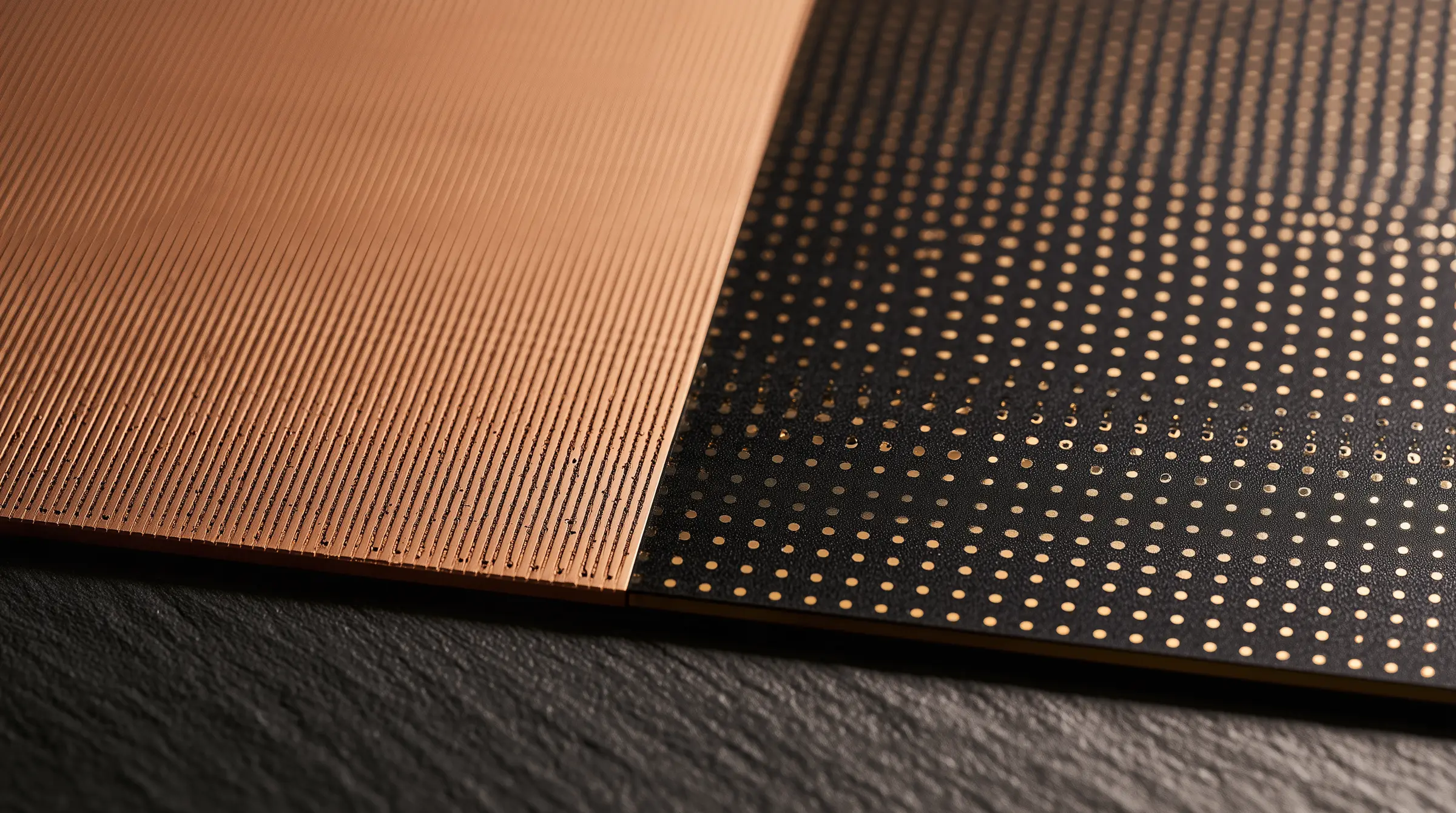
mSAP, the modified semi-additive process, builds circuit lines up by plating onto a very thin copper base instead of etching them out of thick foil, which allows the fine lines used in smartphone mainboards, substrate-like boards and some AI hardware. A line able to do it would be one of the first in Thailand. The question for buyers is when it becomes a source they can qualify, which is the subject of this article.
What changed between July and October
On 3 July 2026 the company marked the groundbreaking of phase two in Thailand with an article on its own WeChat channel, republished by Sina: "we look forward to the mSAP line starting production at the end of this year".[1] The wording is a hope rather than a formal forecast, and it set no revenue date.
The investor relations record filed on 19 October, after meetings on 18 and 19 October, is more specific. The building is under construction and expected to be complete at the end of November. Core equipment has long lead times and is "basically all ordered". Production is expected to start in the second quarter of 2027, when the first line is delivered, limited by equipment delivery; monthly capacity will then rise over about one quarter, with revenue contribution "hoped" to begin in the fourth quarter of 2027.[3]
- June 2024
- ReportedPhase one of the Thai plant (First Quality Circuit) starts production.
- 3 July 2026
- HopePhase two groundbreaking. Company article: “we look forward to” the mSAP line starting at the end of this year.
- July to September 2026
- ReportedExisting Thai plant breaks even in July and contributes profit in August and September.
- 18 to 19 October 2026
- ReportedInvestor record: building under construction; core equipment “basically all ordered” with long lead times.
- End of November 2026
- TargetBuilding expected complete.
- Q2 2027
- TargetFirst mSAP line delivered and started, limited by equipment delivery.
- Q3 2027
- TargetAbout one quarter of ramp-up.
- Q4 2027
- TargetRevenue contribution “hoped” to begin.
Read together, the two statements put the start about two quarters later than in July, a change announced 108 days apart. The stated cause is equipment delivery. The October record does not say which tools are late, how many lines phase two will hold, or what monthly capacity the first line will reach.[3]
Three projects at three speeds
The same October record describes three projects that are easy to conflate.[3]
| Project | Stage, October 2026 | Next step stated by the company |
|---|---|---|
| Existing Thai plant, First Quality Circuit phase one | In production since 2024; break-even in July, profit in August and September | Higher utilisation from the first quarter of 2027 as power-supply and optical-module orders arrive |
| Phase six, Sihui, China | Start set for early November 2026 | Output and ramp from the first quarter of 2027 |
| Thai phase two, first mSAP line | Building under construction | Building complete end of November; line start-up Q2 2027; revenue Q4 2027 |
A separate project funded by the company's 2023 convertible bonds, 800,000 square metres a year of boards in China, had its equipment completion date moved from December 2025 to December 2026 and full output from December 2026 to December 2027.[8] It is not the Thai line, and its dates should not be read as the mSAP timetable.
What the accounts show
Show the numbers
| Nine months to September | 2025 | 2026 |
|---|---|---|
| Revenue | 1,396.17 | 2,089.85 |
| Net profit to shareholders | 130.93 | 264.05 |
| Operating cash flow | 105.44 | 78.20 |
| Cash spent on plant and equipment | 227.93 | 340.01 |
| Balance sheet | 2025-12-31 | 2026-06-30 | 2026-09-30 |
|---|---|---|---|
| Construction in progress | 178.90 | 294.19 | 359.09 |
| Cash and bank balances | 710.38 | 425.47 | 477.03 |
| Receivables | 496.50 | 590.20 | 762.69 |
| Inventory | 295.05 | 386.52 | 534.13 |
The group's business is growing fast. Revenue for January to September rose 49.68% to RMB 2,089.85 million and net profit to shareholders doubled to RMB 264.05 million; in the third quarter alone revenue was RMB 857.22 million, up 59.78%.[4]
Cash tells a more mixed story. Operating cash flow for the nine months fell 25.83% to RMB 78.20 million, equal to 29.62% of profit, while cash spent on plant, equipment and other long-term assets rose 49.17% to RMB 340.01 million. Spending exceeded operating cash by RMB 261.81 million, and cash and bank balances fell from RMB 710.38 million at the end of 2025 to RMB 477.03 million, down 32.85%. Receivables rose RMB 266.19 million and inventory RMB 239.08 million over the same period, so growth itself absorbed much of the cash.[4]
The third quarter on its own was better. Subtracting the first half from the nine months gives operating cash flow of RMB 62.27 million in the quarter, up 5.56% on the RMB 58.99 million of a year earlier.[2][4]
Construction in progress doubled, from RMB 178.90 million to RMB 359.09 million, which the company attributes to spending on new plants.[4] At the end of June, RMB 186.63 million of it was equipment awaiting installation and commissioning and RMB 107.56 million was new factory buildings, without saying where.[2] The filings support real investment; they do not show how much of it is the Thai mSAP line, and nothing in them suggests the schedule change is a funding problem. The company's own explanation is equipment delivery.
The existing Thai plant
| First Quality Circuit (Thailand) | Revenue | Revenue a month | Net result | Net margin |
|---|---|---|---|---|
| 2025, twelve months | 192.36 | 16.03 | -33.18 | -17.2% |
| First half of 2026, six months | 146.14 | 24.36 | -19.34 | -13.2% |
| July to September 2026 | Not published; management says break-even in July and a profit in August and September. | |||
First Quality Circuit lost RMB 33.18 million on revenue of RMB 192.36 million in 2025, a net margin of minus 17.2%. In the first half of 2026 it lost RMB 19.34 million on RMB 146.14 million, minus 13.2%, with monthly revenue up 52% on the 2025 average.[6][2] It was 11.9% of group revenue in the half, and pulled the group's main-business gross margin down from 19.76% to 16.15%.[2][8] Management says it broke even in July, made a profit in August and September, and is running at about break-even utilisation.[3]
The plant reached the turn about two years after its first output. The mSAP line will add a more demanding process to a site that has only just reached profit.
Why an mSAP line takes time to ramp
Installing the tools is the start of the work. On a fine-line line, yield depends on several steps that each need tuning on the actual equipment and materials:
- Base copper and dielectric. Mitsui Kinzoku's ultra-thin carrier foils target line and space from 30/30 µm down to 10/10 µm depending on the grade, and the choice of foil sets which designs a line can run.[9] The company describes resin-coated copper (RCC) and mSAP as complementary, a material route and a process route used together in phase two.[5]
- Seed etching. Removing the thin seed copper between plated lines without undercutting them is a known limit on fine lines; laboratory work shows how dielectric roughness and selective etching set the achievable pitch, with 10/10 µm common and 5/5 µm a research target.[18][19]
- Microvia filling. Filling laser vias with copper from the bottom up depends on tightly controlled plating additives and current.[20]
Research on ramp-ups explains why the first months are slow. Early output competes with the experiments needed to raise yield, so capacity and yield both start low and rise with deliberate engineering effort.[13][16] Reviews of ramp-up treat it as its own phase, between the end of installation and full output, with its own disruptions,[14] and in semiconductors the speed of yield learning is the largest single driver of a new process's profitability.[17] Copying a proven process exactly shortens the ramp, while changing it during the ramp slows it.[15] The company has run multilayer and HDI boards in Thailand since 2024, but not mSAP, so some learning on site is unavoidable.
How long from start-up to revenue
The October timetable allows one quarter between start-up and ramp and revenue: start in the second quarter, ramp in the third, revenue in the fourth. The grid below keeps the company's own logic and changes only two inputs: how late start-up is, and how long the ramp takes.
| Start-up slips by | Ramp of one quarter | Ramp of two quarters | Ramp of three quarters |
|---|---|---|---|
| None (Q2 2027) | Q4 2027 | Q1 2028 | Q2 2028 |
| One quarter | Q1 2028 | Q2 2028 | Q3 2028 |
| Two quarters | Q2 2028 | Q3 2028 | Q4 2028 |
Eight of the nine cases fall in 2028. Only the company's own case, with no slip and a one-quarter ramp, gives revenue in 2027.
There are reasons to treat that case as the optimistic end. People and organisations routinely underestimate how long their own projects will take, even when they know similar projects ran late,[21] because they plan from the inside view of their own project rather than the record of comparable ones.[22] Large capital projects run late more often than not,[23] and executives who are more confident issue more optimistic guidance and miss it more often.[24] Overruns also come from rework and scope changes, not only from optimism,[25] and a new process on a new site is exposed to both. The company has already moved its start once in 2026. None of this predicts a further delay; it suggests a buyer should plan for the range in the grid rather than its best cell.
A comparison helps calibrate. Meiko Electronics, a Japanese maker, completed its first dedicated any-layer HDI plant at Hoa Binh in Vietnam in July 2025, an investment of about ¥50 billion for Plant 1. Its investor material sets out construction, equipment, certification and mass production as separate stages.[10][11] The useful lesson is the separation of stages, not a timetable to transfer.
What a buyer should check
For a buyer, a line is a source when it can repeatedly supply an approved board at the required quality, cost and delivery, the criteria a Japanese maker such as Fuji Electric sets out in its procurement policy.[12] Japanese manufacturers have long relied on close, long-term supplier relationships with detailed monitoring of each supplier,[29] so an approval is earned plant by plant and part by part. A group's certificates, or its record at another site, do not transfer to a new line automatically.
| Stage | Evidence to ask for | What it shows |
|---|---|---|
| 1. Facility | Building handover, utilities, permits, wastewater and staffing | The site can run the process |
| 2. Installed process | Equipment acceptance and a full process map, including any outsourced steps | The whole chain exists at the site |
| 3. Engineering | Production-panel coupons and stack-ups with measured line, space and registration | The board family can be made, beyond a demonstration |
| 4. Reliability | Thermal cycling, humidity, insulation and via tests on the buyer's conditions, with failures reported | The board survives the buyer's use |
| 5. Customer approval | A dated approval for plant, process and part, and the change-control terms | A named customer has accepted the scope |
| 6. Commercial supply | Several production lots, delivery record and monthly good output for the required stack-up | Supply is repeatable at volume |
Until stages 4 to 6 are visible for a board family, the Thai mSAP line is a prospective option. Research on supply risk finds that keeping a second qualified source, or a ready contingency, is often worth its cost when a supplier's reliability is uncertain,[26][30] which describes a new line during its ramp. Buyers planning launches in 2027 that need mSAP should keep their current qualified source through the ramp and start engineering samples with the Thai line as early as the company allows.
Outlook
The move of PCB capacity to Thailand is part of a wider shift of production from China to third countries since the US and Chinese tariffs of 2018 and 2019,[27] and Thai electronics have long grown through foreign-led production networks of this kind.[28] Sihui Fuji's Thai base fits that pattern: the existing plant has reached profit, and the mSAP line would move it up to finer work.
The next informative disclosures are, in order: confirmation that the building was handed over in late November; the arrival and acceptance of the first line's equipment; first production panels; customer qualifications; and mSAP revenue shown separately. Each answers a different question, and a new spending figure answers none of them. MPBxChange will update this article as they appear.
Methodology and limitations
This article compares the company's dated statements with its interim, third-quarter and annual reports, its capital-increase notice and its reply to the exchange on the share placement, all filed on CNINFO or the Shenzhen Stock Exchange and read in the original Chinese; with suppliers' and a comparable maker's own technical and investor material; and with peer-reviewed research, each paper checked against its DOI record.[1][2][3][4][5][6][7][8] Data are as of 20 October 2026. No company, customer or supplier was contacted.
- The investor relations records are management's answers to analysts, not independent interviews or verification. All 2027 dates are management expectations.
- The interim and third-quarter reports are unaudited. Accounts are consolidated; only the Thai subsidiary's revenue and profit are reported separately, and spending is not split by plant.
- Third-quarter operating cash flow is derived as nine months less the first half. Monthly revenue and margins for the Thai plant are the author's arithmetic on reported totals.
- The scenario grid is arithmetic on the company's own timetable, not a forecast of the company's results.
- The research on ramp-ups and forecasting comes mainly from semiconductors, other manufacturing and capital projects; no peer-reviewed study of mSAP line ramps in PCB plants was found, and the studies on supplier relations come from the automotive industry.
- The July statement was published on the company's WeChat channel and is cited from Sina's republication.
- Nothing in this article is investment advice.
Sources
- company Sihui Fuji Electronics Technology Co., Ltd. (2026). 泰国一品电路二期工厂奠基,mSAP产线布局全面提速 (Phase two of First Quality Circuit, Thailand, breaks ground; mSAP line accelerates), company WeChat article. Sina Finance (republished). back to text
- company Sihui Fuji Electronics Technology Co., Ltd. (2026). 2026年半年度报告 (Interim report 2026). CNINFO, Shenzhen Stock Exchange filing, stock code 300852. back to text
- company Sihui Fuji Electronics Technology Co., Ltd. (2026). 投资者关系活动记录表 2026-002 (Investor relations activity record, 18 to 19 October 2026). CNINFO, Shenzhen Stock Exchange filing, stock code 300852. back to text
- company Sihui Fuji Electronics Technology Co., Ltd. (2026). 2026年第三季度报告 (Third-quarter report 2026). CNINFO, Shenzhen Stock Exchange filing, stock code 300852. back to text
- company Sihui Fuji Electronics Technology Co., Ltd. (2026). 投资者关系活动记录表 (Investor relations activity record, 15 September 2026). CNINFO, Shenzhen Stock Exchange filing, stock code 300852. back to text
- company Sihui Fuji Electronics Technology Co., Ltd. (2026). 2025年年度报告 (Annual report 2025). Shenzhen Stock Exchange. back to text
- company Sihui Fuji Electronics Technology Co., Ltd. (2026). 关于对泰国子公司增资及完成注册资本变更登记的公告 (2026-056) (Capital increase in the Thai subsidiary and completed registration). CNINFO, Shenzhen Stock Exchange filing, stock code 300852. back to text
- company Sihui Fuji Electronics Technology Co., Ltd. (2026). 向特定对象发行股票审核问询函回复 (修订稿) (Revised reply to the exchange's enquiry on the share placement). CNINFO, Shenzhen Stock Exchange filing, stock code 300852. back to text
- company Mitsui Mining & Smelting Co., Ltd. (2024). MicroThin ultra-thin copper foil with carrier for package substrates (MT18Ex, FL, GN), technical datasheet. Mitsui Kinzoku. back to text
- company Meiko Electronics Co., Ltd. (2026). Financial results presentation, fiscal 2025 (second half). Meiko Electronics. back to text
- company Meiko Electronics Co., Ltd. (2025). Completion ceremony of the Hoa Binh plant, Meiko's first dedicated any-layer HDI factory. Meiko Electronics. back to text
- company Fuji Electric Co., Ltd. (2026). Procurement policy. Fuji Electric. back to text
- academic Terwiesch, C., & Bohn, R. E. (2001). Learning and process improvement during production ramp-up. International Journal of Production Economics, 70(1), 1–19. DOI 10.1016/S0925-5273(00)00045-1. back to text
- academic Surbier, L., Alpan, G., & Blanco, E. (2014). A comparative study on production ramp-up: State-of-the-art and new challenges. Production Planning & Control, 25(15), 1264–1286. DOI 10.1080/09537287.2013.817624. back to text
- academic Terwiesch, C., & Xu, Y. (2004). The copy-exactly ramp-up strategy: Trading-off learning with process change. IEEE Transactions on Engineering Management, 51(1), 70–84. DOI 10.1109/TEM.2003.822465. back to text
- academic Hatch, N. W., & Mowery, D. C. (1998). Process innovation and learning by doing in semiconductor manufacturing. Management Science, 44(11), 1461–1477. DOI 10.1287/mnsc.44.11.1461. back to text
- academic Weber, C. M. (2004). Yield learning and the sources of profitability in semiconductor manufacturing and process development. IEEE Transactions on Semiconductor Manufacturing, 17(4), 590–596. DOI 10.1109/TSM.2004.835724. back to text
- academic Kawashima, S., & Tajima, K. (2015). Advanced chemical processes for semi-additive PWB fabrication for fine line formation targeting line and space = 5 μm/5 μm. International Symposium on Microelectronics, 2015(1), 1–4. DOI 10.4071/isom-2015-tha22. back to text
- academic Raj, P. M., Nair, C., Lu, H., Liu, F., Sundaram, V., Hess, D. W., & Tummala, R. (2015). "Zero-undercut" semi-additive copper patterning: A breakthrough for ultrafine-line RDL lithographic structures and precision RF thin-film passives. 2015 IEEE 65th Electronic Components and Technology Conference (ECTC), 402–405. DOI 10.1109/ECTC.2015.7159624. back to text
- academic Dow, W.-P., Yen, M.-Y., Liao, S.-Z., Chiu, Y.-D., & Huang, H.-C. (2008). Filling mechanism in microvia metallization by copper electroplating. Electrochimica Acta, 53(28), 8228–8237. DOI 10.1016/j.electacta.2008.06.042. back to text
- academic Buehler, R., Griffin, D., & Ross, M. (1994). Exploring the "planning fallacy": Why people underestimate their task completion times. Journal of Personality and Social Psychology, 67(3), 366–381. DOI 10.1037/0022-3514.67.3.366. back to text
- academic Kahneman, D., & Lovallo, D. (1993). Timid choices and bold forecasts: A cognitive perspective on risk taking. Management Science, 39(1), 17–31. DOI 10.1287/mnsc.39.1.17. back to text
- academic Flyvbjerg, B. (2014). What you should know about megaprojects and why: An overview. Project Management Journal, 45(2), 6–19. DOI 10.1002/pmj.21409. back to text
- academic Hribar, P., & Yang, H. (2016). CEO overconfidence and management forecasting. Contemporary Accounting Research, 33(1), 204–227. DOI 10.1111/1911-3846.12144. back to text
- academic Love, P. E. D., Edwards, D. J., & Irani, Z. (2012). Moving beyond optimism bias and strategic misrepresentation: An explanation for social infrastructure project cost overruns. IEEE Transactions on Engineering Management, 59(4), 560–571. DOI 10.1109/TEM.2011.2163628. back to text
- academic Tomlin, B. (2006). On the value of mitigation and contingency strategies for managing supply chain disruption risks. Management Science, 52(5), 639–657. DOI 10.1287/mnsc.1060.0515. back to text
- academic Fajgelbaum, P. D., & Khandelwal, A. K. (2022). The economic impacts of the US–China trade war. Annual Review of Economics, 14, 205–228. DOI 10.1146/annurev-economics-051420-110410. back to text
- academic Kohpaiboon, A., & Jongwanich, J. (2013). International production networks, clusters, and industrial upgrading: Evidence from automotive and hard disk drive industries in Thailand. Review of Policy Research, 30(2), 211–239. DOI 10.1111/ropr.12010. back to text
- academic Cusumano, M. A., & Takeishi, A. (1991). Supplier relations and management: A survey of Japanese, Japanese-transplant, and U.S. auto plants. Strategic Management Journal, 12(8), 563–588. DOI 10.1002/smj.4250120802. back to text
- academic Sawik, T. (2014). Joint supplier selection and scheduling of customer orders under disruption risks: Single vs. dual sourcing. Omega, 43, 83–95. DOI 10.1016/j.omega.2013.06.007. back to text
How to cite: Dendoung, T. (2026). Sihui Fuji's Thai mSAP line moves to 2027: three projects at three speeds. MPBxChange research. https://www.mpbxchange.com/research/sihui-fuji-thailand-msap-2027