Key points
- Styles 2116, 1080 and 1078 are thin E-glass cloth: 0.097, 0.064 and 0.040 mm in Isola's style table, against 0.173 mm for the thick style 7628. Thin styles carry more weft threads per inch, 47 to 58 against 31 for 7628.[2]
- Supply-chain sources reported on 22 October 2026 that these three styles were the tightest, with weaving looms the main bottleneck: world output of the relevant looms is about 2,400 a year, possibly 3,600 in 2027.[4]
- Thinner cloth takes more loom time. Guosheng Securities estimates one loom's output at about 220,000 metres a year of 7628 and about 180,000 of 1080; 100 million metres takes about 450 looms in thick cloth and about 1,300 in very thin cloth.[13]
- Glass makers moved capacity to AI grades, causing severe shortages of traditional yarn and fabric, Kingboard Laminates reported.[5] KCE Electronics, a Thai board maker, said the shift restricted materials for conventional PCB production.[25]
- Mainstream boards absorb the price. The average fiberglass price in the KCE group's filings rose from US$0.47 a metre in the first quarter of 2025 to US$0.95 in the third quarter of 2026, and style 1080 E-glass cloth rose about 300% from low to high.[27][25][4]
- AI boards and IC substrates are allocated first: suppliers prioritise AI server capacity, and NVIDIA, Microsoft, Google and Amazon booked most of Nittobo's premium cloth for 2026.[25][17] Allied Circuit's three laminate suppliers quoted 8 to 20 weeks for E-glass laminate and 4 to 12 weeks for K-glass in November 2026.[24]
- Relief is dated from the third quarter of 2026 to 2028; supply-chain sources expect the thin-cloth shortage to ease gradually from the second half of 2027.[5][21][28][4]
Thin glass cloth and where it sits
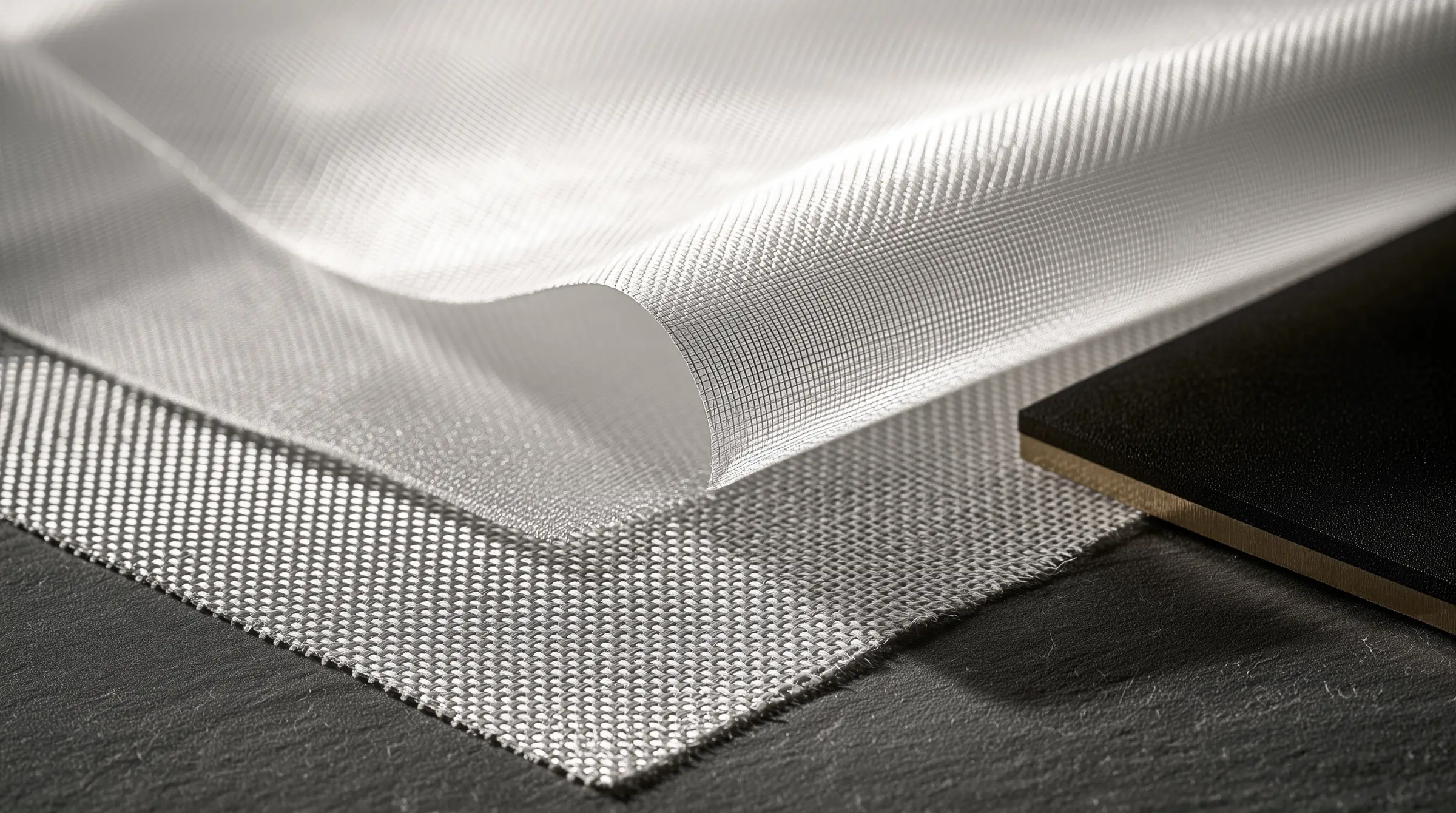
Glass cloth, woven from glass yarn, is the reinforcement inside laminate and prepreg. A style number names a construction: the yarn, the weave and the thread count each way. Warp threads run along the roll; fill threads, or weft, are laid across them one pick at a time.[2]
| Style | Warp x fill, ends per inch (Isola) | Thickness, mm (Isola) | Weight, g/m² (Isola) | Yarn (Isola) | Warp x weft per 25 mm (Nittobo) | Thickness, mm (Nittobo) |
|---|---|---|---|---|---|---|
| 7628 | 44 x 31 | 0.173 | 203 | ECG 75-1/0 | 44 x 32 | 0.180 |
| 2116 | 60 x 58 | 0.097 | 109 | ECE 225-1/0 | 60 x 58 | 0.095 |
| 1080 | 60 x 47 | 0.064 | 49 | ECD 450-1/0 | 60 x 46 | 0.055 |
| 1078 | 54 x 54 | 0.040 | 48 | ECD 450 1/0 | ||
| 106 | 56 x 56 | 0.032 | 25 | ECD 900-1/0 | 56 x 56 | 0.035 |
Isola, a laminate maker, published the counts per inch in April 2022;[2] Nittobo, a glass-cloth maker, lists its IPC excerpts per 25 mm, and says the values are measured examples rather than standard ones.[1] The two tables agree on counts to within one thread. Nittobo also lists ultra-thin styles down to 1010, 0.013 mm thick, with 95 threads per 25 mm each way.[1]
7628Thick: mainstream cores
2116Thin
1080Thin
1078Thin
106Thinner still
- Warp x fill: threads per inch, and the threads drawn over a quarter-inch square (6.35 mm) at that count[2]
- Fabric thickness in Isola's table[2]
- Picks in one metre of cloth: fill threads per inch times 39.37 (MPBxChange calculation)
The thin styles sit where boards are thin and dense. Nittobo writes that thinner cloth is needed as boards are used at high densities and become lighter, thinner and smaller, and that its ultra-thin cloth suits very small laser-drilled and mechanically drilled holes.[1] Asahi Kasei describes itself as the world's leading supplier of ultra-thin glass fabric for compact portable devices such as smartphones and tablet PCs.[3] TrendForce reported in August 2026 that AI-enabled smartphones were driving faster-than-expected demand for thin glass cloth.[17] China's price quotes list the thick style 7628 as the mainstream cloth.[12]
Who makes electronic glass cloth
Each maker below is confirmed as making electronic glass cloth by a filing, a company page or a named report; "thin" appears only where a source uses the word.
| Maker | Base and listing | Makes | Thin or specialty cloth, per the source | Latest dated step | Source |
|---|---|---|---|---|---|
| Nan Ya Plastics | Taiwan, 1303 | Glass yarn, glass cloth, laminate | Low-Dk and low-CTE glass fibre | 12 November 2026: more specialty yarn positions and looms, from the fourth quarter of 2026 | [8][9] |
| Kingboard Laminates | Hong Kong, 1888 | Glass yarn, glass cloth, laminate | Specialty cloth for AI; sub-5-micron ultra-fine yarn | 24 August 2026: looms in operation from 3,333 in 2025 to 5,833 by 2028 | [5] |
| Taiwan Glass | Taiwan, 1802 | Glass fibre materials, low-Dk glass cloth | Second-generation low-Dk and low-CTE | Third expansion phase due in 2027; a fourth phase approved on 2 November 2026 | [8][19] |
| Fulltech Fiber Glass | Taiwan, 1815 | Glass yarn and cloth, integrated | High-end cloth; quartz cloth for M9 materials | 5 July 2026: groundbreaking in Chachoengsao, Thailand | [28] |
| Grace Fabric Technology | China, 603256 | Electronic glass cloth and specialty yarn | Very thin, ultra-thin, thin and thick cloth | January to September 2026: 133 million metres made | [12][15] |
| China Jushi | China, 600176 | Glass fibre, electronic cloth | New capacity mainly 7628 | November 2026: electronic cloth supply still tight | [11][4] |
| Sinoma Science and Technology (Taishan Fiberglass) | China, 002080 | Electronic cloth, fine yarn, specialty cloth | Low-dielectric and low-expansion cloth | November 2026: placement of 4.481 billion yuan for 35 and 24 million metres a year of low-dielectric cloth | [12][14] |
| Chongqing Polycomp International | China, 301526 | Specialty electronic cloth | LDK first and second generation, low CTE | November 2026: LDK cloth in stable volume supply | [12][14] |
| Ping An Electric | China, 001359 | Electronic glass cloth | Thin electronic-grade cloth in volume supply | October 2026: placement plan with a Thai electronic-cloth base | [12][16] |
| Nittobo | Japan | Glass yarn and cloth, integrated | Ultra-thin cloth; T-glass; NE-glass | New Fukushima building planned to start in January to March 2027 | [1][21] |
| Asahi Kasei | Japan | Glass fabric for boards and package substrates | Ultra-thin glass fabric | [3] |
Nan Ya describes itself as the world's second-largest maker of electronic-grade glass yarn and third in glass cloth and laminate, with eight glass-cloth plants in Taiwan and China.[8] Nittobo holds about 90% of T-glass and 60% to 70% of NER-glass, according to TrendForce,[18] and Nan Ya says it will weave 20% of the specialty glass fabric Nittobo supplies to the world by 2027.[20]
Why output grows slowly
Looms
Supply-chain sources quoted by Commercial Times put world output of the relevant weaving looms at about 2,400 a year, possibly 3,600 in 2027; new looms must still be installed and ramped up, and loom supply is the core bottleneck.[4] Kingboard reported in August that high-performance weaving looms had become virtually impossible to source in the market, and that it plans to raise its looms in operation from 3,333 in 2025 to 5,833 by 2028.[5] Nan Ya's third-quarter presentation states that equipment suppliers also face shortages,[9] and Unimicron's chairman said on 20 October that some specific machines had lead times of up to 30 months.[10]
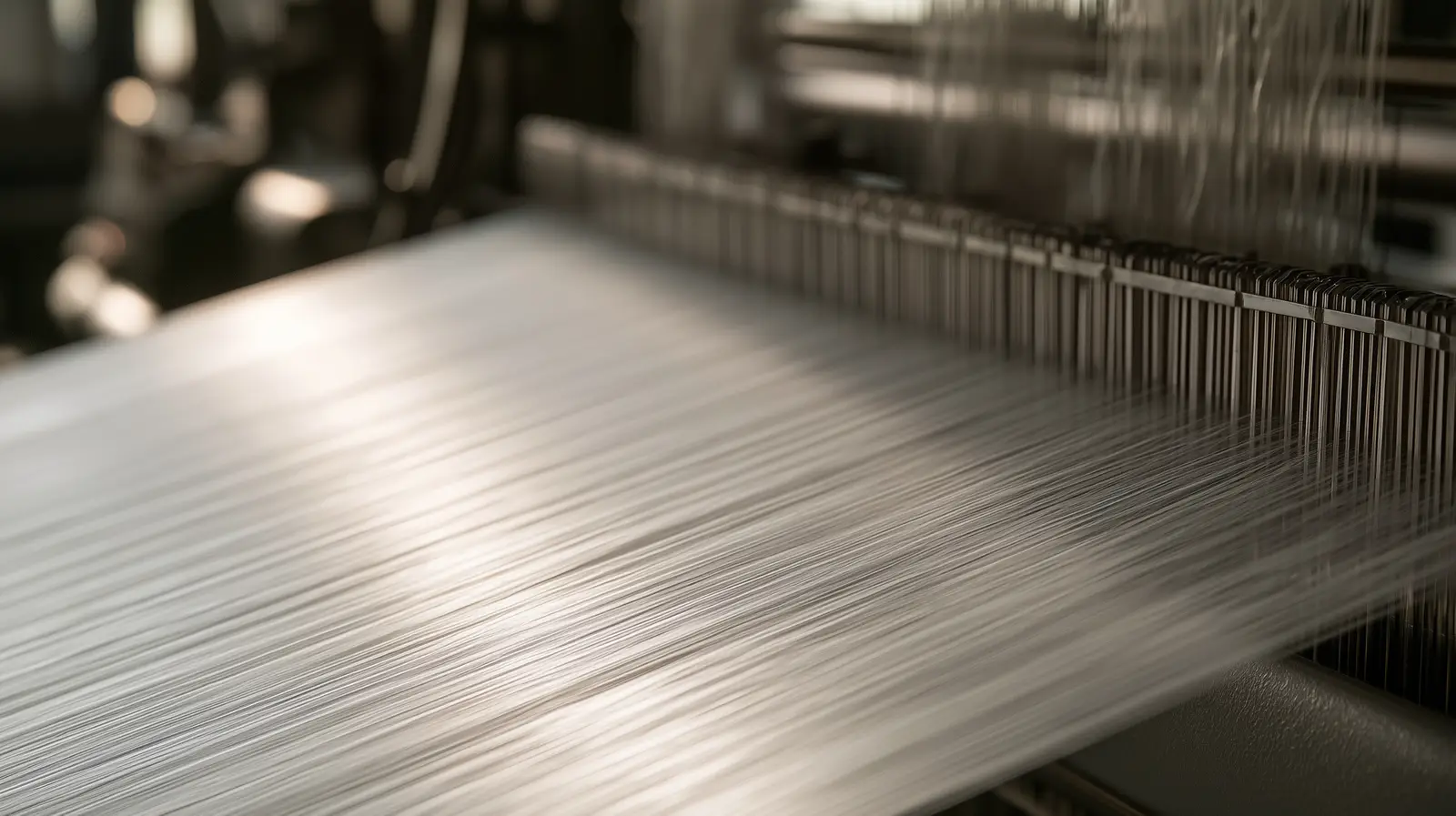
Two Chinese reports name the loom maker. Wallstreetcn reported in September 2026 that looms for high-end electronic cloth have long depended on Toyota, with Toyota's loom production booked to 2030.[13] A column published on Lanjinger in July wrote that more than 90% of high-end electronic cloth relies on high-end air-jet looms from a few makers such as Toyota, that Toyota's JAT910 series is the only loom that stably mass-produces ultra-thin cloth of style 1080 and below, and that a Toyota loom requested then would be delivered around 2029.[14]
1Glass batch and kiln
2Glass yarn
Constraint reported
3Weaving loom
Constraint reported
4Glass cloth
Constraint reported
5Prepreg and laminate
Constraint reported
Relief, dated
- 189.2 / 180.2US$ million: new laminate and prepreg plants in Thailand approved by the BOI, Taiwan Union Technology in Chonburi and Doosan in Samut Prakan[29]
6Board plant
Capacity moved to AI grades
Existing looms and furnaces have been turned toward higher grades. Kingboard reported that capacity had largely shifted to AI-related products, causing severe shortages of traditional electronic glass yarn and fabric, a shortage that intensified further from the second half of 2026.[5] Nan Ya says it is actively shifting capacity toward high-end materials, and that price rises have spread from high-end to baseline specifications.[9] Grace Fabric reduced its output of thick and thin E-glass cloth in the first half of 2026 to make specialty and ultra-thin cloth, and its staff told Lanjinger that its capacity was full and booked into 2027.[15]
KCE Electronics described the shift from the buyer's side. On 11 August it said many glass makers had prioritised capacity for AI applications, constraining supply for conventional PCB materials;[26] on 5 November, that the continued priority for AI server applications further restricted materials for conventional PCB production.[25]
Yarn and kilns
Kingboard commissioned a 70,000-tonne-a-year electronic yarn plant in Shaoguan at the end of June 2026 to ease the shortage of traditional yarn, and is building eight specialty-yarn kilns in Qingyuan for low-Dk, low-CTE and quartz yarn, two of them due in the second half of 2026.[5] Sinoma expects electronic yarn to be short throughout 2027, and China Jushi expects 2027 growth in electronic cloth supply to struggle to match demand.[11] The thin styles use finer yarn: 2116 is woven from ECE 225 yarn and 1080 and 1078 from ECD 450.[2] On 3 November, Zhuochuang data put E225 yarn at 71,500 yuan a tonne and D450 yarn at 147,500 yuan.[12]
Loom time per style
A loom lays one fill thread per pick, so the fill count sets how many picks a metre of cloth takes. On the counts in Isola's table, one metre of 7628 takes 1,220 picks, 1080 takes 1,850, 1078 takes 2,126, 106 takes 2,205 and 2116 takes 2,283 (MPBxChange calculation: fill threads per inch times 39.37 inches).[2] The thin styles take 1.52 to 1.87 times the picks of 7628.
Guosheng Securities estimates one loom's annual output at about 220,000 metres of 7628, 180,000 of 1080, 125,000 of 106 and 77,000 of 1010; 100 million metres takes about 450 looms in thick cloth and about 1,300 in very thin cloth. Wallstreetcn, reporting the estimate, adds that as thin and specialty cloth take a larger share the same looms yield less cloth, and that high-end products lose further efficiency during set-up and yield ramp-up.[13] Kingboard's own plan points the same way: 1.05 billion metres a year from 5,833 looms is about 180,010 metres a loom (MPBxChange calculation), close to the 1080 figure.[5]
MPBxChange reads the loom as the neck of the chain for thin styles. At 180,000 metres a loom, a year of world loom output, about 2,400 machines, adds about 432 million metres a year of 1080, and 3,600 machines would add about 648 million (MPBxChange calculation on the two sources' figures).[4][13]
Qualification
New cloth reaches a board only after qualification. KCE notes that laminate and prepreg are approved by customers under their approved vendor lists, so alternatives are limited and require customer qualification.[26] Fulltech reported that it had developed quartz cloth for M9-grade materials and would take it through certification for customers' China plus one needs.[28] Ventec expects its M7 to M9 materials to show certification results from the first quarter of 2027.[7] How a laminate is specified, by brand or by IPC-4101 slash sheet, is set out in the article on laminate lead times.
Who absorbs the shortage
Mainstream FR-4 boards
E-glass cloth: 7628, 2116, 1080, 1078
Crowded out: capacity moved to higher grades, demand remains
- 0.47 / 0.95KCE's average fiberglass price, US$ a metre, Q1 2025 and Q3 2026[27][25]
- +300%Style 1080 E-glass cloth, low to high, about[4]
- +15%Kingboard, laminate and prepreg with 2116 or thinner cloth, 13 October[6]
- 12Kingboard price rises in 2026, by a supply-chain count[4]
- 4Weeks for FR-4 laminate, about, up from a few days (ILFA, March)[23]
- 8-20Weeks for E-glass laminate (Allied Circuit's suppliers, November)[24]
- 15-20%Supply gap in thin electronic-grade cloth (Ventec)[7]
AI server, switch and accelerator boards
Low-Dk cloth (NE-glass, K-glass)
Allocated first: suppliers prioritise AI server capacity
- 30%Supply gap in low-Dk glass cloth, about (Ventec)[7]
- 140Days for advanced high-Tg and low-Dk laminates, up to (ILFA)[23]
- 4-12Weeks for K-glass laminate (Allied Circuit's suppliers, November)[24]
- 5-6xCost of low-Dk glass against E-glass, about (Isola)[2]
- 2026Most of Nittobo's premium cloth booked by NVIDIA, Microsoft, Google and Amazon (Nikkei)[17]
IC package substrates
T-glass, the low-CTE cloth
Concentrated: one maker holds most of the supply
The number at the top of each lane is the order in which the sources describe glass capacity being allocated: AI and substrate grades first, conventional grades after.[25][5][4]
Mainstream FR-4 boards
Mainstream FR-4 boards use E-glass laminate. Isola's guide lists E-glass as the standard grade: standard Dk and Df, low cost and readily available.[2] Supply-chain sources describe general electronic-grade cloth as crowded out by the move to high-end products, while demand for it remains.[4] The KCE group's average fiberglass price was US$0.47, 0.49, 0.50 and 0.52 a metre in the four quarters of 2025 and US$0.62, 0.74 and 0.95 in the first three quarters of 2026; the third-quarter price is 27.84% above the second quarter and 87.64% above the third quarter of 2025, as the filing computes it.[27][26][25] A supply-chain survey put the cumulative rise in style 1080 E-glass cloth at about 300% from low to high.[4] In China, 7628 cloth was quoted at 14.6 to 14.65 yuan a metre and 2116 thin cloth at 20.2 yuan on 3 November; Guojin Securities put 7628 at about 4.15 yuan at the end of the third quarter of 2025 and its cumulative rise to October at more than 200%.[12]
Laminate prices followed. Kingboard raised its prices for laminate and prepreg made with 2116 or thinner cloth by 15% from 13 October, its eighth adjustment of the year, citing strong demand for thin cloth and tight cloth and yarn supply;[6] a supply-chain survey reported on 22 October counted 12 price rises by Kingboard in 2026.[4] Kingboard also reported that a shortage of glass fabric forced some laminate producers to partially suspend production in the first half of 2026.[5]
Lead times lengthened. ILFA, a German board maker, said in March that FR-4 laminate lead times from major suppliers had grown from only a few days to around four weeks.[23] In November, Allied Circuit's slides showed E-glass laminate at 16 to 20, 12 to 16 and 8 to 12 weeks from its three suppliers.[24] Ventec put the supply gap in electronic-grade thin glass cloth at about 15% to 20%, and in high-end automotive materials at about 10%.[7]
AI server, switch and accelerator boards
AI boards use low-Dk cloth, deployed in the board layers beneath AI chips.[19] The same Ventec estimate puts the low-Dk cloth gap at about 30%, with tightness possibly lasting beyond the second quarter of 2027.[7] ILFA reported lead times of up to 140 days (20 weeks) for advanced high-Tg and low-Dk laminates.[23] Isola's style guide notes that low-Dk glass increases cost by about 5 to 6 times over E-glass and increases lead time.[2] Nikkei, as reported by TrendForce, said NVIDIA, Microsoft, Google and Amazon had booked most of Nittobo's premium glass cloth capacity for 2026.[17] In Allied Circuit's November slides, K-glass laminate was quoted at 8 to 12, 4 to 6 and 6 to 8 weeks, shorter than E-glass from each of the three suppliers.[24]
IC package substrates
Substrates use T-glass, the low-CTE cloth.[19] Nittobo holds about 90% of it, and TrendForce did not expect new capacity before mid-2027 at the earliest.[18] Counterpoint Research expected substrate makers to raise prices by 3% to 5% quarter on quarter in the first half of 2026 to pass on costs.[22] Unimicron's chairman named T-glass cloth, laminate and ABF as the bottlenecks, and expected a gap of about 20% in the most critical materials in 2027.[10] Nittobo expects capacity in the year to March 2029 to reach three times that of the year to March 2026.[17]
MPBxChange reads the split as follows. Allocation goes first to AI and substrate grades, and their buyers see the shortage as a question of timing: the shorter K-glass weeks and the booked Nittobo capacity point that way.[24][17] Mainstream boards meet the shortage as price and lead time on standard E-glass, the grade that lost loom time to the higher grades.
- Top: KCE group's average fiberglass price, US$ a metre, by quarter; 2026 in copper[27][26][25]
- Bottom, weeks: FR-4 laminate from major suppliers, about 4, up from a few days (ILFA, March 2026)[23]
- Advanced high-Tg and low-Dk laminates, up to 140 days (ILFA, March 2026)[23]
- E-glass laminate, span of Allied Circuit's three suppliers (November 2026)[24]
- K-glass laminate, same three suppliers (November 2026)[24]
Relief, dated step by step
| When | Who | Step | Source |
|---|---|---|---|
| Third quarter of 2026 | Kingboard | Shaoguan fabric facility, 95 million metres a year, fully commissioned | [5] |
| Second half of 2026 | Kingboard | Two of eight specialty-yarn kilns in Qingyuan | [5] |
| Fourth quarter of 2026 into 2027 | Nan Ya | More specialty yarn positions and weaving looms contribute capacity | [8] |
| January to March 2027 | Nittobo | New building at Fukushima starts production, about ¥15 billion | [21] |
| First quarter of 2027 | Kingboard | Lianzhou ultra-fine yarn, phase II, 10,000 tonnes a year | [5] |
| First half of 2027 | Kingboard | Qingyuan fabric, 78 million metres a year, mainly specialty cloth for AI | [5] |
| 2027 | Loom makers | World output of the relevant looms possibly 3,600 a year | [4] |
| 2027 | China Jushi | New capacity, mainly 7628 thick cloth, in mass production | [4] |
| 2027 | Taiwan Glass | Third expansion phase for low-Dk and low-CTE glass materials completed | [8] |
| From 2027 | Grace Fabric | Huangshi park, about 150 million metres of high-end cloth, released gradually | [16] |
| Third quarter of 2027 | Kingboard | Nansha fabric, 150 million metres a year | [5] |
| Third quarter of 2027 | Fulltech | Chachoengsao, Thailand: mass production of high-end cloth | [28] |
| Second half of 2027 to 2028 | Supply-chain sources | Thin-cloth shortage eases gradually | [4] |
| 2028 | Kingboard | 5,833 looms, 1.05 billion metres a year including 100 million of specialty cloth | [5] |
China Jushi's new capacity is mainly 7628 thick cloth, a different style from the thin cloth now shortest, so supply-chain sources expect its relief for 2116, 1080 and 1078 to be limited.[4] MPBxChange reads the thin styles as the last to ease: their relief depends on looms, the slowest input to add.
Thailand
KCE Electronics' filings describe the squeeze from a Thai board plant: the restriction falls on materials for conventional PCB production, and its laminate subsidiary Thai Laminate Manufacturer adjusted its selling prices.[25] Local relief comes first as laminate: plants of ITEQ, Taiwan Union Technology, Ventec and Doosan Electro-Materials, including Taiwan Union Technology's in Chonburi and Doosan's in Samut Prakan, approved by the BOI at US$189.2 million and US$180.2 million.[29] Their dates are in glass cloth and laminate for Thai PCB plants.
Glass cloth comes later. Fulltech Fiber Glass broke ground in Chachoengsao on 5 July 2026, plans mass production of high-end cloth in the third quarter of 2027 and says the capacity is fully booked by customers;[28] the BOI listed the project at US$99.4 million (3.3 billion baht).[29] Ping An Electric's placement plan of October 2026 sets 425 million yuan for a Thai electronic-cloth base, with a planned construction period of 24 months; land transfer, outbound investment filing and BOI approval were in process at the time of the plan.[16][12] The wider shortage is in PCB material shortage 2026, and each Thai step in the Thailand PCB tracker.
Data and method
This article draws on the glass-style tables of Nittobo and Isola; Asahi Kasei's product page; Kingboard Laminates' interim results of 24 August 2026; Nan Ya Plastics' presentation of 27 October 2026; KCE Electronics' filings of 12 May, 11 August and 5 November 2026; Allied Circuit's slides of 12 November 2026; a BOI release of 8 July 2026; reports in Commercial Times, the Economic Daily News, Securities Daily, Sina Finance, Wallstreetcn, Lanjinger, Jiemian, Anue, Evertiq and Nikkan Kogyo Shimbun; and research by TrendForce and Counterpoint Research, dated in the source list. All were read on 15 November 2026.
Counts and thicknesses are as each maker prints them; Isola counts ends per inch and Nittobo per 25 mm. Prices and amounts are in the currency each source uses, without conversion. Picks per metre, looms per 100 million metres, metres per loom from Kingboard's plan and metres added by a year of loom output are MPBxChange calculations from the cited figures. Plans and forecasts are given as the named company or source states them. Interpretation is MPBxChange analysis.
Sources
- company Nitto Boseki Co., Ltd. (Nittobo) (2026). Glass cloth for electronic materials: glass cloth for printed wiringboards, glass cloth specifications and ultra-thin glass cloth. Nittobo (nittobo.co.jp). back to text
- company Isola Group (2022). Glass Fabric (April 2022): glass style table, yarn nomenclature and glass style decision tree. Isola Group (isola-group.com). back to text
- company Asahi Kasei Corporation (2026). Product list of Electronics: glass fabric for printed circuit boards. Asahi Kasei (asahi-kasei.com). back to text
- press Commercial Times (工商時報) (2026). 薄玻纖布、CCL又缺貨 下月看漲15% 南亞直言市場已「沒得挑」 (Thin glass cloth and CCL short again, 22 October 2026). Commercial Times (ctee.com.tw). back to text
- company Kingboard Laminates Holdings Limited (2026). Interim Results Announcement, six months ended 30 June 2026 (24 August 2026; HKEX stock code 1888). HKEXnews (Hong Kong Exchanges and Clearing). back to text
- press Commercial Times (工商時報) (2026). CCL大廠發話 建滔今年第八度調價 日商松下明年起漲200% 台鏈後市看旺 (Kingboard's eighth price adjustment of the year, 14 October 2026). Commercial Times (ctee.com.tw). back to text
- press Commercial Times (工商時報) (2026). 騰輝:CCL原料明年Q1續看漲 (Ventec: CCL raw materials to keep rising in Q1 next year, 14 November 2026). Commercial Times (ctee.com.tw). back to text
- press Economic Daily News (經濟日報) (2026). 電子材料供需偏緊 漲價趨勢不變 (Electronic materials stay tight, 12 November 2026). udn.com (聯合新聞網). back to text
- company Nan Ya Plastics Corporation (2026). 3Q26 investor conference presentation, 27 October 2026 (filed on MOPS; TWSE stock code 1303). Market Observation Post System (MOPS), Taiwan Stock Exchange. back to text
- press Economic Daily News (經濟日報) (2026). 欣興董座:AI 帶動硬體黃金時期 2027年 PCB 載板材料缺口20% (Unimicron's chairman on a 20% materials gap in 2027, 20 October 2026). money.udn.com. back to text
- press Sina Finance (新浪财经) (2026). 电子布价格近期再度走高 供需偏紧情况或将延续 (Electronic cloth prices rise again, 6 November 2026). Sina Finance (sina.cn). back to text
- press Securities Daily (证券日报网), hosted by 10jqka (同花顺) (2026). 电子布行业迎来高景气周期 产业链量价齐升 (Electronic cloth enters a boom cycle, 4 November 2026). 10jqka (news.10jqka.com.cn). back to text
- press Wallstreetcn (华尔街见闻), citing Guosheng Securities (国盛证券) (2026). 电子布涨势不停的背后:丰田订单排到2030年,国产织机将迎来史诗级替代窗口? (Behind the electronic cloth price rises: Toyota booked to 2030, 24 September 2026). Wallstreetcn (wallstreetcn.com). back to text
- press 浩海投研 (Haohai Touyan), column on Lanjinger (蓝鲸财经) (2026). 电子布需求暴增,竟带火了玻璃纤维 (Electronic cloth demand lifts glass fibre, 21 July 2026). Lanjinger (lanjinger.com). back to text
- press Lanjinger News (蓝鲸新闻) (2026). 半年利润暴增344%、订单排到2027年,电子布龙头宏和科技扩产狂奔之下负债率逼近50% (Grace Fabric expands high-end cloth, 14 August 2026). Lanjinger (lanjinger.com). back to text
- press Jiemian News (界面新闻) (2026). 7.77亿押注电子布,平安电工的“第二增长曲线”成色如何? (Ping An Electric's electronic-cloth plan, October 2026). Jiemian (jiemian.com). back to text
- press TrendForce, citing Nikkei (2026). [News] Nittobo Raises FY2027 Net Profit Forecast by JPY 3B; No Further T-Glass Price Hikes Planned (6 August 2026). TrendForce. back to text
- press TrendForce (2026). Glass Fiber Cloth: The Underlying Material Shortage in AI Infrastructure (30 April 2026). TrendForce Insights. back to text
- press TrendForce, citing TechNews (2025). [News] What Is Glass Fiber Fabric and Why Is T-Glass Critical for AI Servers? A Deep Dive (24 November 2025). TrendForce. back to text
- press TrendForce, citing TechNews (2025). [News] Nittobo Expands Glass-Fiber Output with Nan Ya; Nan Ya to Handle 20% by 2027 Amid AI Surge (28 November 2025). TrendForce. back to text
- press Nikkan Kogyo Shimbun (日刊工業新聞) (2025). 投資額150億円…ガラスクロスに商機、日東紡が新工場 (Nittobo builds a new glass-cloth plant, 30 September 2025). Newswitch (newswitch.jp). back to text
- data Counterpoint Research (2026). From T-Glass Crisis to Capacity Erosion: The Multi-Year Substrate Shortage (11 March 2026). Counterpoint Research. back to text
- press Evertiq (2026). PCB lead times extend as material shortages and AI demand strain supply chains (12 March 2026). Evertiq. back to text
- company Allied Circuit Co., Ltd. (2026). 2026 Institutional Investor Conference, November 2026 (slides filed on MOPS, English; slide 16, Upstream Materials Status). Market Observation Post System (MOPS), Taiwan Stock Exchange; Taipei Exchange stock code 8155. back to text
- company KCE Electronics Public Company Limited (2026). Management Discussion and Analysis, Quarter 3 ending 30 September 2026 (letter to the Stock Exchange of Thailand, 5 November 2026). KCE Electronics investor relations (kce.listedcompany.com). back to text
- company KCE Electronics Public Company Limited (2026). Management Discussion and Analysis, Quarter 2 ending 30 June 2026 (letter to the Stock Exchange of Thailand, 11 August 2026). KCE Electronics investor relations (kce.listedcompany.com). back to text
- company KCE Electronics Public Company Limited (2026). Management Discussion and Analysis, Quarter 1 ending 31 March 2026 (letter to the Stock Exchange of Thailand, 12 May 2026). KCE Electronics investor relations (kce.listedcompany.com). back to text
- press Anue (鉅亨網) (2026). 富喬泰國新廠動土 擴展東南亞AI與低軌衛星關鍵材料布局 (Fulltech breaks ground on its new Thai plant, 6 July 2026). Anue (cnyes.com). back to text
- official Thailand Board of Investment (BOI) (2026). Thailand Approves $1.99 Billion in New Investment, Led by AI and Advanced Electronics (release of 8 July 2026). BOI One Start One Stop Investment Center (OSOS). back to text
How to cite: MPBx Research Team (2026). Thin glass cloth 2116, 1080 and 1078: makers, looms and who absorbs the shortage. MPBxChange research. https://www.mpbxchange.com/research/thin-glass-cloth-2116-1080-1078-makers-looms-shortage